Birman cat insurance
Blue eyes, gentle soul! Napo's lifetime Birman cat insurance includes dental treatment as standard, unlimited 24/7 video vet appointments via FirstVet, and payments made straight to your vet.

Birman cat insurance
Blue eyes, gentle soul! Napo's lifetime Birman cat insurance includes dental treatment as standard, unlimited 24/7 video vet appointments via FirstVet, and payments made straight to your vet.
Birman cat insurance
Blue eyes, gentle soul! Napo's lifetime Birman cat insurance includes dental treatment as standard, unlimited 24/7 video vet appointments via FirstVet, and payments made straight to your vet.
Birman cat quick facts
Meet the ‘Sacred Cat of Burma’. Birmans are quietly sociable cats who love to be around people, but this much-loved breed can be prone to hereditary health conditions as they get older.
Size & weight:
Medium, around 2.7-5.4kg
Coat:
Semi-long and silky, sheds moderately
Activity level:
Low to moderate
Lifespan:
12-16 years
Breed group:
Semi-longhair
Temperament:
Loving, easygoing, calm
Birman cat quick facts
Meet the ‘Sacred Cat of Burma’. Birmans are quietly sociable cats who love to be around people, but this much-loved breed can be prone to hereditary health conditions as they get older.
Size & weight:
Medium, around 2.7-5.4kg
Coat:
Semi-long and silky, sheds moderately
Activity level:
Low to moderate
Lifespan:
12-16 years
Breed group:
Semi-longhair
Temperament:
Loving, easygoing, calm
Birman cat quick facts
Meet the ‘Sacred Cat of Burma’. Birmans are quietly sociable cats who love to be around people, but this much-loved breed can be prone to hereditary health conditions as they get older.
Size & weight:
Medium, around 2.7-5.4kg
Coat:
Semi-long and silky, sheds moderately
Activity level:
Low to moderate
Lifespan:
12-16 years
Breed group:
Semi-longhair
Temperament:
Loving, easygoing, calm

Birman cat temperament & personality
Birman cats make great family pets as they love being around their humans, without demanding too much attention. Typically gentle and sociable, they prefer a calm routine over a chaotic household.
That said, they also have a playful, curious streak. Give them a window perch or some safe climbing surfaces to keep them settled and content.
Birman cats tend to communicate quietly, often with a soft chirp or trill rather than a loud meow. Most like to stay close by, often following you from room to room. Think of them as a fluffy shadow!
Birman cat temperament & personality
Birman cats make great family pets as they love being around their humans, without demanding too much attention. Typically gentle and sociable, they prefer a calm routine over a chaotic household.
That said, they also have a playful, curious streak. Give them a window perch or some safe climbing surfaces to keep them settled and content.
Birman cats tend to communicate quietly, often with a soft chirp or trill rather than a loud meow. Most like to stay close by, often following you from room to room. Think of them as a fluffy shadow!
Birman cat temperament & personality
Birman cats make great family pets as they love being around their humans, without demanding too much attention. Typically gentle and sociable, they prefer a calm routine over a chaotic household.
That said, they also have a playful, curious streak. Give them a window perch or some safe climbing surfaces to keep them settled and content.
Birman cats tend to communicate quietly, often with a soft chirp or trill rather than a loud meow. Most like to stay close by, often following you from room to room. Think of them as a fluffy shadow!
Birman cat training and exercise needs
Birman cats are happy with a fairly relaxed lifestyle. As they have a fairly solid, medium-to-large build, keeping up with daily interactive play matters just as much for their weight as for their mood.
They're smart and sociable enough to enjoy learning simple tricks or games, but aren’t usually as demanding as more energetic breeds. Little and often usually works better than one long session.

Birman cat training and exercise needs
Birman cats are happy with a fairly relaxed lifestyle. As they have a fairly solid, medium-to-large build, keeping up with daily interactive play matters just as much for their weight as for their mood.
They're smart and sociable enough to enjoy learning simple tricks or games, but aren’t usually as demanding as more energetic breeds. Little and often usually works better than one long session.
Birman cat training and exercise needs
Birman cats are happy with a fairly relaxed lifestyle. As they have a fairly solid, medium-to-large build, keeping up with daily interactive play matters just as much for their weight as for their mood.
They're smart and sociable enough to enjoy learning simple tricks or games, but aren’t usually as demanding as more energetic breeds. Little and often usually works better than one long session.
Birman cat grooming
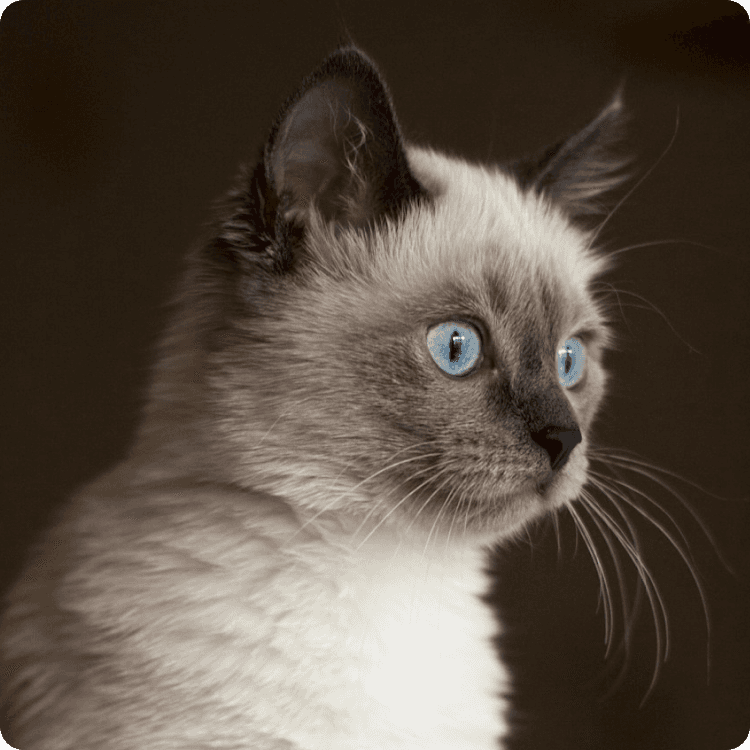
Typical Birman cat coat colours include seal point (similar to a Siamese cat), blue, chocolate and lilac, though they can also sport more unique shades of red, cream, and tortie (when two colours are mixed, appearing in female Birmans).
The Birman cat’s semi-long coat is relatively easy to manage, needing a brush two or three times a week to prevent tangles, particularly around the legs and their fluffy ruff at the neck. Beyond that, routine nail trims and dental checks round out their grooming care.
Birman cat grooming
Typical Birman cat coat colours include seal point (similar to a Siamese cat), blue, chocolate and lilac, though they can also sport more unique shades of red, cream, and tortie (when two colours are mixed, appearing in female Birmans).
The Birman cat’s semi-long coat is relatively easy to manage, needing a brush two or three times a week to prevent tangles, particularly around the legs and their fluffy ruff at the neck. Beyond that, routine nail trims and dental checks round out their grooming care.
Birman cat grooming
Typical Birman cat coat colours include seal point (similar to a Siamese cat), blue, chocolate and lilac, though they can also sport more unique shades of red, cream, and tortie (when two colours are mixed, appearing in female Birmans).
The Birman cat’s semi-long coat is relatively easy to manage, needing a brush two or three times a week to prevent tangles, particularly around the legs and their fluffy ruff at the neck. Beyond that, routine nail trims and dental checks round out their grooming care.
What health conditions are Birman cats prone to?
With their unique genetics, Birman cats can be prone to certain health issues worth knowing about before bringing one home.
Common conditions include kidney disease, heart disease, and inherited issues like congenital hypotrichosis.
Insure your Birman cat with Napo now to keep them covered for life.
Kidney disease (PKD)
Polycystic kidney disease is a recognised inherited condition in the breed, where fluid-filled cysts gradually affect kidney function. DNA determines if your cat carries the gene, so ask your breeder whether both parents have been tested.
Heart disease (HCM)
Birman cats can be more likely to develop hypertrophic cardiomyopathy, where the heart muscle thickens over time. Unlike PKD, there’s no genetic test for this in the breed, so regular vet checks will help you monitor it.
Congenital hypotrichosis
This is a rare inherited condition where Birman kittens are born with little to no coat and are more susceptible to infections. Worth knowing about if you're buying from a breeding line with a known history.
Other things to keep an eye on
Corneal dermoids - small patches of skin-like tissue can grow on the surface of the eye and need surgery to remove
Distal polyneuropathy - though extremely rare, this inherited nerve condition can cause progressive weakness in the back legs
Dental disease - Napo pet insurance includes dental cover as standard, as long as you take your Birman cat for annual dental check-ups

What health conditions are Birman cats prone to?
With their unique genetics, Birman cats can be prone to certain health issues worth knowing about before bringing one home.
Common conditions include kidney disease, heart disease, and inherited issues like congenital hypotrichosis.
Insure your Birman cat with Napo now to keep them covered for life.
Kidney disease (PKD)
Polycystic kidney disease is a recognised inherited condition in the breed, where fluid-filled cysts gradually affect kidney function. DNA determines if your cat carries the gene, so ask your breeder whether both parents have been tested.
Heart disease (HCM)
Birman cats can be more likely to develop hypertrophic cardiomyopathy, where the heart muscle thickens over time. Unlike PKD, there’s no genetic test for this in the breed, so regular vet checks will help you monitor it.
Congenital hypotrichosis
This is a rare inherited condition where Birman kittens are born with little to no coat and are more susceptible to infections. Worth knowing about if you're buying from a breeding line with a known history.
Other things to keep an eye on
Corneal dermoids - small patches of skin-like tissue can grow on the surface of the eye and need surgery to remove
Distal polyneuropathy - though extremely rare, this inherited nerve condition can cause progressive weakness in the back legs
Dental disease - Napo pet insurance includes dental cover as standard, as long as you take your Birman cat for annual dental check-ups
What health conditions are Birman cats prone to?
With their unique genetics, Birman cats can be prone to certain health issues worth knowing about before bringing one home.
Common conditions include kidney disease, heart disease, and inherited issues like congenital hypotrichosis.
Insure your Birman cat with Napo now to keep them covered for life.
Kidney disease (PKD)
Polycystic kidney disease is a recognised inherited condition in the breed, where fluid-filled cysts gradually affect kidney function. DNA determines if your cat carries the gene, so ask your breeder whether both parents have been tested.
Heart disease (HCM)
Birman cats can be more likely to develop hypertrophic cardiomyopathy, where the heart muscle thickens over time. Unlike PKD, there’s no genetic test for this in the breed, so regular vet checks will help you monitor it.
Congenital hypotrichosis
This is a rare inherited condition where Birman kittens are born with little to no coat and are more susceptible to infections. Worth knowing about if you're buying from a breeding line with a known history.
Other things to keep an eye on
Corneal dermoids - small patches of skin-like tissue can grow on the surface of the eye and need surgery to remove
Distal polyneuropathy - though extremely rare, this inherited nerve condition can cause progressive weakness in the back legs
Dental disease - Napo pet insurance includes dental cover as standard, as long as you take your Birman cat for annual dental check-ups

How much does Birman cat insurance cost?
The cost of insuring a Birman cat depends on their age and the level of vet fee cover you choose. Napo's lifetime cover limits range from £2,000 to £16,000 a year, so you can pick what you need for your cat and budget.
As they get older, Birmans may develop health conditions like heart and kidney disease that need ongoing care, not just one-off treatment - but that's exactly what lifetime pet insurance is built for.
How much does Birman cat insurance cost?
The cost of insuring a Birman cat depends on their age and the level of vet fee cover you choose. Napo's lifetime cover limits range from £2,000 to £16,000 a year, so you can pick what you need for your cat and budget.
As they get older, Birmans may develop health conditions like heart and kidney disease that need ongoing care, not just one-off treatment - but that's exactly what lifetime pet insurance is built for.
How much does Birman cat insurance cost?
The cost of insuring a Birman cat depends on their age and the level of vet fee cover you choose. Napo's lifetime cover limits range from £2,000 to £16,000 a year, so you can pick what you need for your cat and budget.
As they get older, Birmans may develop health conditions like heart and kidney disease that need ongoing care, not just one-off treatment - but that's exactly what lifetime pet insurance is built for.
Birman cat FAQs
Why do Birman cats have white paws?
It's part of the breed standard! Birman cats have a distinctive colourpoint coat with white 'gloves' on all four paws, a pattern breeders have carefully selected for since the breed was first established in 1925.
Are Birmans good for first-time cat owners?
Yes! They're often recommended for first-timers as their calm, gentle nature suits owners who want an adaptable, easygoing companion.
Do Birman cats get on well with children and other pets?
Generally, yes. Their gentle, adaptable temperament makes them one of the more suitable breeds around a busy family household.
Do Birman cats need to go outside?
Not necessarily, as they love being at home. Many Birmans live happily as indoor cats, provided they get enough company and gentle daily play.
Are Birman cats hypoallergenic?
No cat breed is truly hypoallergenic and Birmans are no exception. Their semi-long coat can trigger allergies as much as any other breed!
Why are Birmans called the ‘Sacred Cat of Burma’?
Legend has it Birman cats were once the loyal companions of temple priests in Burma. The story goes that when a devoted white temple cat named Sinh placed his paws on his dying master, his fur turned golden and his eyes a deep sapphire blue, while his feet remained pure white where they touched the holy man. These are trademark features we still see in Birmans today!
Birman cat FAQs
Why do Birman cats have white paws?
It's part of the breed standard! Birman cats have a distinctive colourpoint coat with white 'gloves' on all four paws, a pattern breeders have carefully selected for since the breed was first established in 1925.
Are Birmans good for first-time cat owners?
Yes! They're often recommended for first-timers as their calm, gentle nature suits owners who want an adaptable, easygoing companion.
Do Birman cats get on well with children and other pets?
Generally, yes. Their gentle, adaptable temperament makes them one of the more suitable breeds around a busy family household.
Do Birman cats need to go outside?
Not necessarily, as they love being at home. Many Birmans live happily as indoor cats, provided they get enough company and gentle daily play.
Are Birman cats hypoallergenic?
No cat breed is truly hypoallergenic and Birmans are no exception. Their semi-long coat can trigger allergies as much as any other breed!
Why are Birmans called the ‘Sacred Cat of Burma’?
Legend has it Birman cats were once the loyal companions of temple priests in Burma. The story goes that when a devoted white temple cat named Sinh placed his paws on his dying master, his fur turned golden and his eyes a deep sapphire blue, while his feet remained pure white where they touched the holy man. These are trademark features we still see in Birmans today!
Birman cat FAQs
Why do Birman cats have white paws?
It's part of the breed standard! Birman cats have a distinctive colourpoint coat with white 'gloves' on all four paws, a pattern breeders have carefully selected for since the breed was first established in 1925.
Are Birmans good for first-time cat owners?
Yes! They're often recommended for first-timers as their calm, gentle nature suits owners who want an adaptable, easygoing companion.
Do Birman cats get on well with children and other pets?
Generally, yes. Their gentle, adaptable temperament makes them one of the more suitable breeds around a busy family household.
Do Birman cats need to go outside?
Not necessarily, as they love being at home. Many Birmans live happily as indoor cats, provided they get enough company and gentle daily play.
Are Birman cats hypoallergenic?
No cat breed is truly hypoallergenic and Birmans are no exception. Their semi-long coat can trigger allergies as much as any other breed!
Why are Birmans called the ‘Sacred Cat of Burma’?
Legend has it Birman cats were once the loyal companions of temple priests in Burma. The story goes that when a devoted white temple cat named Sinh placed his paws on his dying master, his fur turned golden and his eyes a deep sapphire blue, while his feet remained pure white where they touched the holy man. These are trademark features we still see in Birmans today!

A note from Napo, our original founder
Hi! I’m Napoleon, but everyone calls me Napo. Like all small Dachshunds, I’m remembered for my enormous personality.
My owner JP (the human founder of Napo) struggled to find good insurance to cover my health needs as I got older. And he loved me so much that when we had to say goodbye, he created an inclusive pet insurance company in my memory 💙
A note from Napo, our original founder
Hi! I’m Napoleon, but everyone calls me Napo. Like all small Dachshunds, I’m remembered for my enormous personality.
My owner JP (the human founder of Napo) struggled to find good insurance to cover my health needs as I got older. And he loved me so much that when we had to say goodbye, he created an inclusive pet insurance company in my memory 💙
A note from Napo, our original founder
Hi! I’m Napoleon, but everyone calls me Napo. Like all small Dachshunds, I’m remembered for my enormous personality.
My owner JP (the human founder of Napo) struggled to find good insurance to cover my health needs as I got older. And he loved me so much that when we had to say goodbye, he created an inclusive pet insurance company in my memory 💙